The Ranch
A working cattle operation in the heart of the Nebraska Sandhills
The Environment
The JHL ranch is located in the Southwest corner of what is known as the Nebraska Sandhills—the last intact grassland ecosystem in North America and the largest grass-stabilized sand dune formation in the Western Hemisphere. Stretching across more than 20,000 square miles, this is one of the most unique landscapes on the continent.
The Sandhills and the ranch were first settled in the 1880s. Previous to that time the 'hills' were thought of as uninhabitable due to the harsh climate and blowing sand. But with gradual climatic changes over the last one hundred years and careful grazing practices, the Nebraska Sandhills have become one of the premier grazing areas in the United States.
What early settlers saw as barren dunes, we see as a carefully balanced ecosystem where native grasses hold the sand in place and cattle thrive on forage that's been growing here for thousands of years. This isn't farmland converted to pasture—it's rangeland as nature intended it.
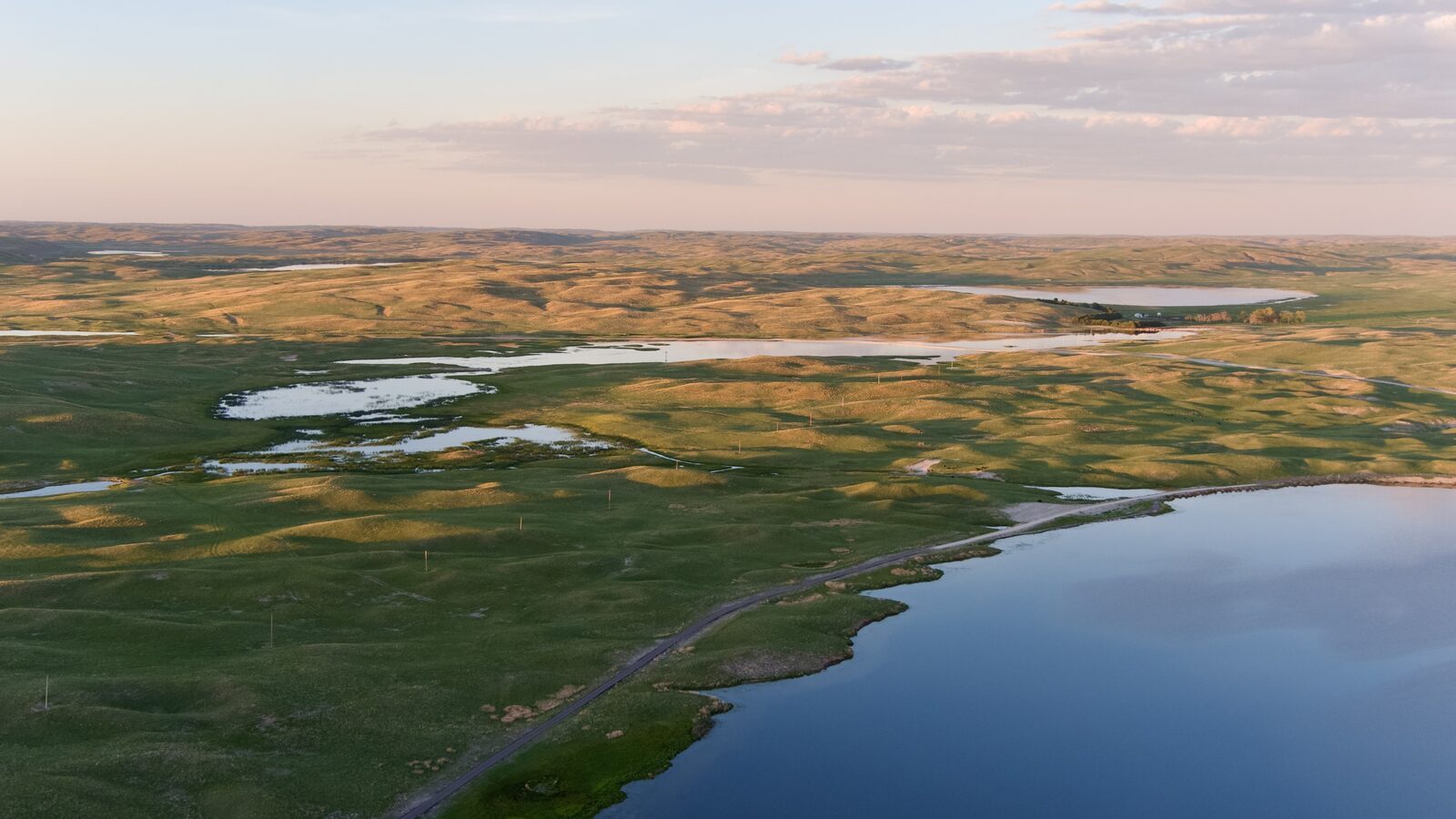
Aerial view showing how the lakes, ponds, and streams interconnect across the ranch
At a Glance
- Located near Ashby, Nebraska in Cherry County
- Approximately 30,000 acres of native rangeland
- 80 paddocks for intensive rotational grazing
- Family operation since 1885
Water, Water, Water
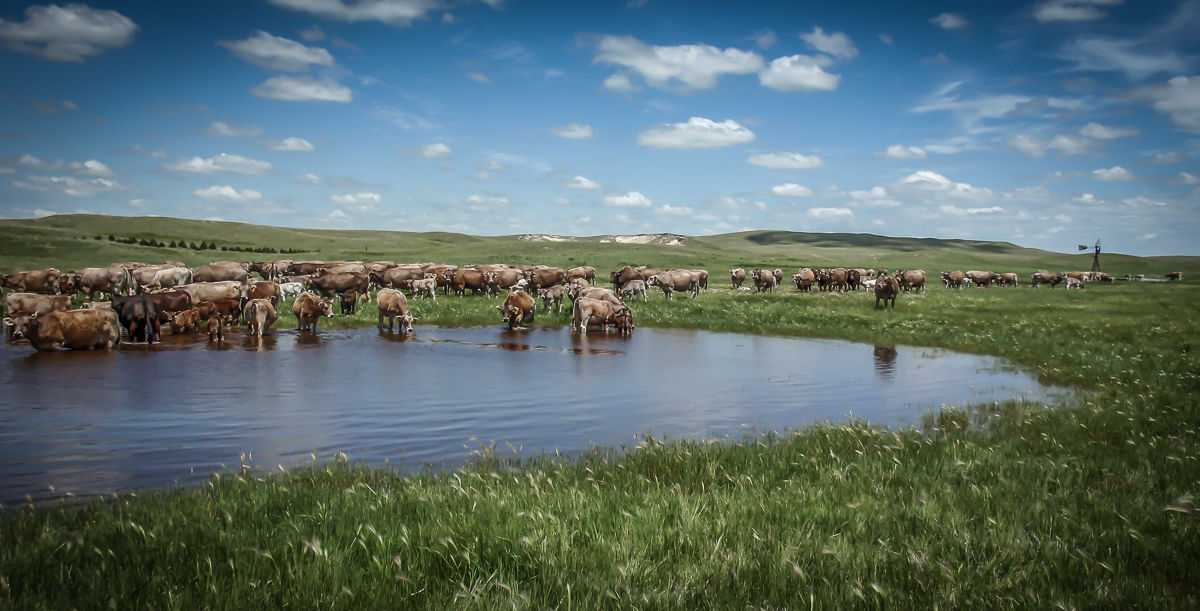
The Sandhills, while semi-arid on the surface, sit atop the Ogallala Aquifer—one of the world's largest underground freshwater reserves. The JHL ranch "floats" on approximately 15,000,000 acre/feet of water. Our cattle drink the same pure, naturally filtered groundwater that's been accumulating here since the formation of the land.
A unique geological attribute is that the headwaters of 12 creeks and streams are located within 15 miles of JHL borders. This is an area that is almost literally a fountain of water. The sandy soil acts as nature's filtration system—rainfall percolates through hundreds of feet of sand before joining the aquifer below.
Between the abundance of groundwater and the approximate 200-250 feet hill height, enough pressure is provided to power "flows" (artesian springs). The Sandhills may be the biggest natural filtration system in the world—and our cattle benefit from it every day.
Stewardship Practices
Through intentional stewardship practices, the meadows and pastures on the JHL have never seen broadcast inorganic pesticides, herbicides, or fertilizers. The underlying ground water is as naturally filtered, pure, and clear as anywhere on earth.
"Some people are fertilizing the meadows, but we don't. It should be safe to do it, because research has shown exactly how much a plant should capture before fertilizer gets past the grass roots so it won't get to the aquifer just a few feet below. But we don't want to chance that and leave a legacy that you can't drink the water because it's got nitrates."
Rotational Grazing
80 paddocks allow us to carefully manage grass health and recovery across the ranch.
No Broadcast Chemicals
Our meadows and pastures have never received broadcast pesticides, herbicides, or fertilizers.
Water Protection
Protecting the Ogallala Aquifer that lies beneath us is a responsibility we take seriously.
Conservation Award
1999 Natural Resource District Conservation Award for stewardship of the land and grasses.
Learn More
Explore our genetics program or read about the history of the JHL Ranch and the families who have worked this land.